Akawo Manager vs Paper Records: Full Comparison

Joseph Braide
5 minutes Read
Jan 6, 2026
96 views

Still Using Paper Records for Daily Contributions?
Here’s What It’s Really Costing You.
For years, paper notebooks have been the backbone of ajo, esusu, daily thrift, and group savings in Nigeria.
And yes—paper worked…
when:
- Groups were small
- Transactions were few
- Trust was purely personal
But today?
Paper records are now the biggest bottleneck in most contribution businesses.
This post gives you a clear, honest comparison between:
- Traditional paper record-keeping
- A modern contribution management app like Akawo Manager
No hype. No tech talk. Just real-world impact.
If you’re new to structuring contribution records properly, start here first:
👉 How to Keep Records for Daily Contribution Customers
How Paper Records Actually Work in Real Life
On paper, notebooks seem simple:
- Write name
- Write amount
- Tick payment
But in practice, paper records introduce problems that compound over time.
Common Realities of Paper-Based Systems
- Payments recorded hours or days later
- Calculations done repeatedly
- Pages rewritten or replaced
- One mistake affecting many balances
These are not carelessness issues.
They are system problems.
Akawo Manager: What Changes When Records Go Digital?
Akawo Manager replaces memory and handwriting with structured automation.
Instead of hoping records are correct, the system:
- Forces consistency
- Prevents common errors
- Creates accountability
Let’s compare them properly.
Paper Records vs Akawo Manager (Side-by-Side)
1. Speed & Time Management
Paper Records
- Manual writing for every transaction
- Daily totals calculated repeatedly
- End-of-month reconciliation is stressful
Akawo Manager
- Payments recorded in seconds
- Balances update automatically
- Reports generated instantly
👉 This is why digital systems dramatically reduce admin time (explained further in How a Contribution Management App Saves You Time and Eliminates Errors).
2. Accuracy & Error Control
Paper Records
- Easy to miss entries
- Wrong totals due to fatigue
- Duplicate or mixed-up customer records
Akawo Manager
- One customer = one profile
- No duplicate entries
- Automatic balance calculations
This is the foundation of error-free tracking, covered in detail here:
👉 How to Track Daily Contributions Without Errors
3. Fraud Risk & Trust
Paper Records
- Pages can be edited or replaced
- No record of who made changes
- Difficult to prove wrongdoing
Akawo Manager
- Time-stamped transactions
- User-level accountability (owner, agent)
- Immutable transaction history
This alone is why many operators switch after just one fraud incident.
(Full breakdown here → How to Prevent Fraud in Daily Contribution Groups)
4. Transparency With Customers
Paper Records
- Customers must “trust the book”
- Disputes depend on memory
- Arguments are common
Akawo Manager
- Clear contribution history per customer
- Easy explanations with records
- Trust backed by data
When records are clear, disputes disappear.
5. Scaling Your Contribution Business
Paper Records
- One notebook per group
- Hard to manage multiple agents
- No clear overview of total business
Akawo Manager
- Multiple groups, one dashboard
- Agent performance tracking
- Full business visibility
This is how serious operators manage growth (see:
👉 How to Manage Multiple Ajo Groups as One Business).
The Hidden Cost of Staying Manual
Most people ask the wrong question:
“Can paper records still work?”
The real question is:
“How much money, time, and trust am I already losing?”
Paper systems cost you through:
- Lost hours
- Preventable errors
- Customer churn
- Reputation damage
These costs don’t show up immediately—but they compound.
Common Mistakes Paper Systems Encourage
Paper doesn’t just allow mistakes—it invites them.
Such as:
- Recording payments later
- Mixing customers on one page
- No withdrawal history
- No agent accountability
These are covered fully here:
👉 7 Common Record-Keeping Mistakes Ajo Collectors Make
Digital systems eliminate these by design.
When Paper Might Still Be “Okay” (Be Honest)
Paper may still work only if:
- You have very few customers
- You don’t plan to scale
- You’re comfortable with disputes
- You’re okay relying on memory
But the moment:
- Money increases
- Agents get involved
- Customers demand clarity
Paper becomes a liability.
Final Verdict: Akawo Manager vs Paper Records
| Area | Paper Records | Akawo Manager |
|---|---|---|
| Speed | Slow | Fast |
| Accuracy | Error-prone | Accurate |
| Fraud Risk | High | Low |
| Customer Trust | Weak | Strong |
| Scalability | Poor | Built-in |
| Professionalism | Low | High |
Paper keeps you busy.
Akawo Manager helps you grow.
If you’re serious about running daily contributions like a real business, not a hustle:
👉 Switch to Akawo Manager today
Digitize your records. Reduce errors. Build trust. Scale confidently.
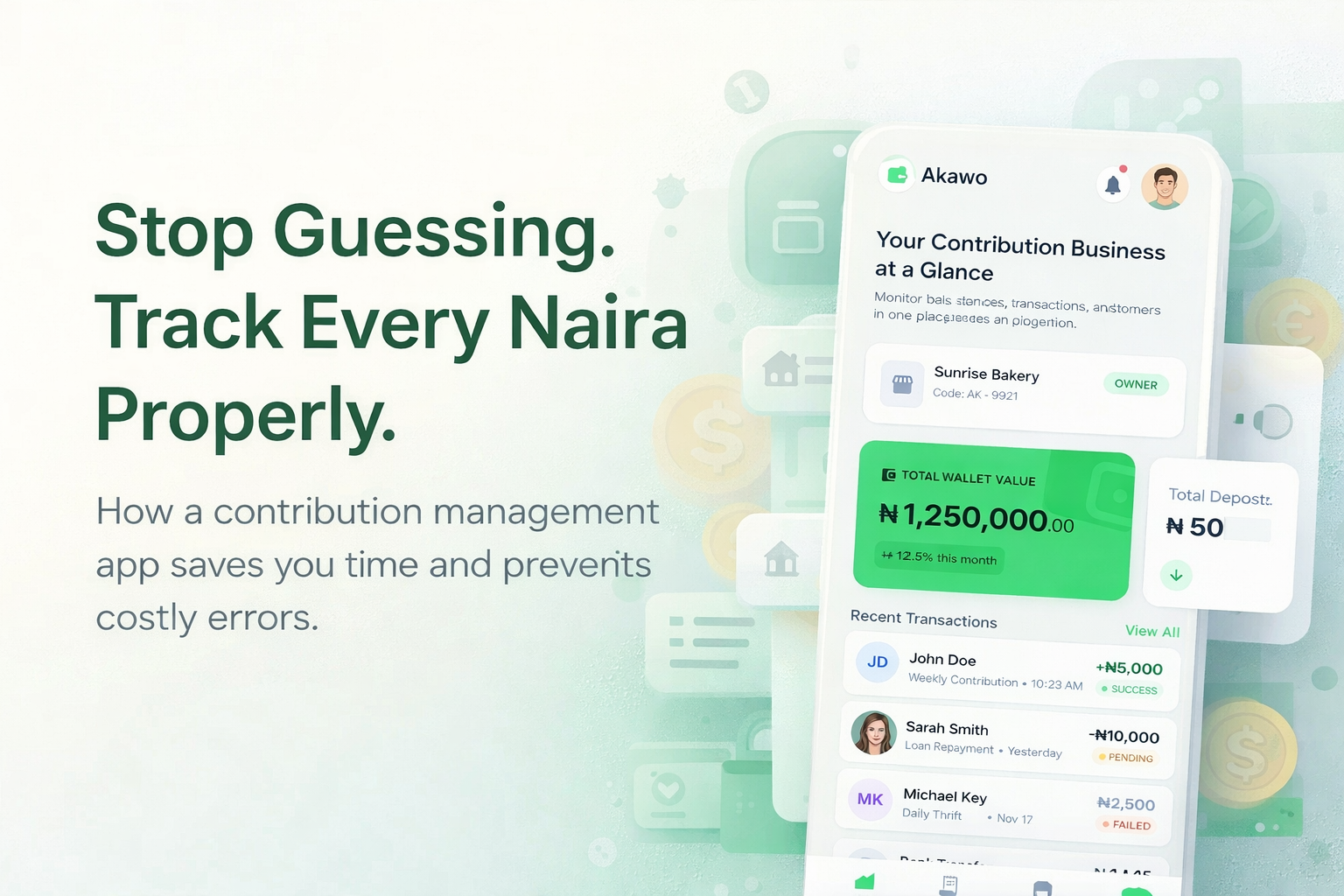
How a Contribution Management App Can Save You Time and Reduce Errors
The Hidden Cost of Manual Contribution Records If you run a daily contribution group—ajo, esusu, …
Akawo Manager vs Paper Records: Full Comparison
Still Using Paper Records for Daily Contributions? Here’s What It’s Really Costing You. For years, …
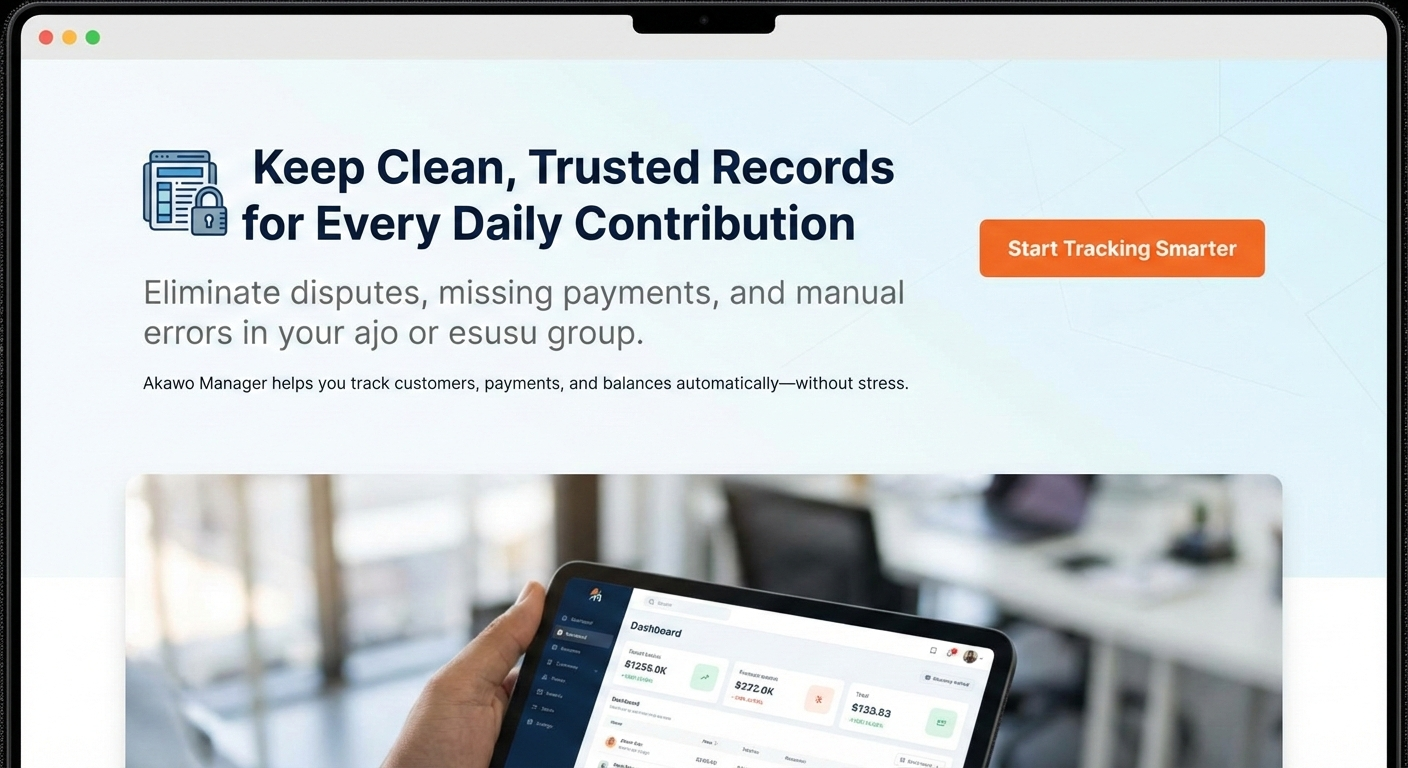
How to Keep Records for Daily Contribution Customers (Without Stress or Errors)
Managing daily contribution customers is not hard because people don’t pay — it’s hard because …