How to Grow Your Daily Contribution Business Faster

Joseph Braide
5 minutes Read
Mar 13, 2026
2 views
Running a daily contribution business (Ajo or Esusu) can start small, but with the right strategies it can grow into a large and profitable operation.
Many contribution managers begin with just a few customers, but over time they build strong networks and manage hundreds of contributors.
Growing your contribution business faster requires more than just collecting payments. It involves building trust, staying organized, and creating systems that support growth.
Here are practical ways to grow your daily contribution business faster.
1. Build Trust and Reliability
Trust is the most important factor in the contribution business.
Customers need to feel confident that their money is safe and properly managed.
You can build trust by:
-
Recording transactions accurately
-
Paying customers on time
-
Communicating clearly about balances
-
Being consistent with collections
When customers trust your system, they are more likely to recommend you to others.
2. Encourage Word-of-Mouth Referrals
Most successful contribution businesses grow through referrals.
When your existing customers are satisfied, they naturally introduce your service to friends, family members, and coworkers.
You can encourage referrals by:
-
Providing excellent service
-
Being transparent with records
-
Maintaining good communication with customers
Word-of-mouth can quickly increase your customer base.
3. Target Specific Communities
Instead of trying to reach everyone, focus on specific groups that commonly participate in contribution systems.
Examples include:
-
Market traders
-
Small shop owners
-
Transport workers
-
Artisans and technicians
When a few people in a community join, others usually follow.
4. Offer Different Contribution Plans
Customers have different financial capacities.
Some may prefer smaller daily contributions, while others can afford larger amounts.
Offering flexible plans such as:
-
₦500 daily
-
₦1,000 daily
-
₦2,000 daily
allows you to attract a wider range of participants.
5. Stay Organized as Your Customers Grow
As your contribution business grows, managing records manually becomes more difficult.
Handling dozens or hundreds of customers with notebooks can lead to:
-
Missing records
-
Calculation errors
-
Customer disputes
Proper organization is necessary if you want your business to grow smoothly.
6. Use Digital Tools to Manage Customers
Digital record systems help contribution managers handle large numbers of customers efficiently.
With digital tools, you can:
-
Record transactions faster
-
Track customer balances automatically
-
View complete transaction histories
-
Reduce manual errors
This makes it much easier to manage a growing contribution business.
Conclusion
Growing your daily contribution business requires trust, consistency, and proper organization.
By building strong relationships with customers, encouraging referrals, and keeping accurate records, you can steadily expand your contribution network.
With the right systems in place, managing a large number of customers becomes much easier and more efficient.
Manage Your Contribution Business with Confidence
Akawo Manager helps contribution managers record transactions, manage customer balances, and organize daily contributions in one place.
With Akawo Manager, you can grow your contribution business while keeping your records accurate and professional.

How a Contribution Management App Can Save You Time and Reduce Errors
The Hidden Cost of Manual Contribution Records If you run a daily contribution group—ajo, esusu, …

Akawo Manager vs Paper Records: Full Comparison
Still Using Paper Records for Daily Contributions? Here’s What It’s Really Costing You. For years, …
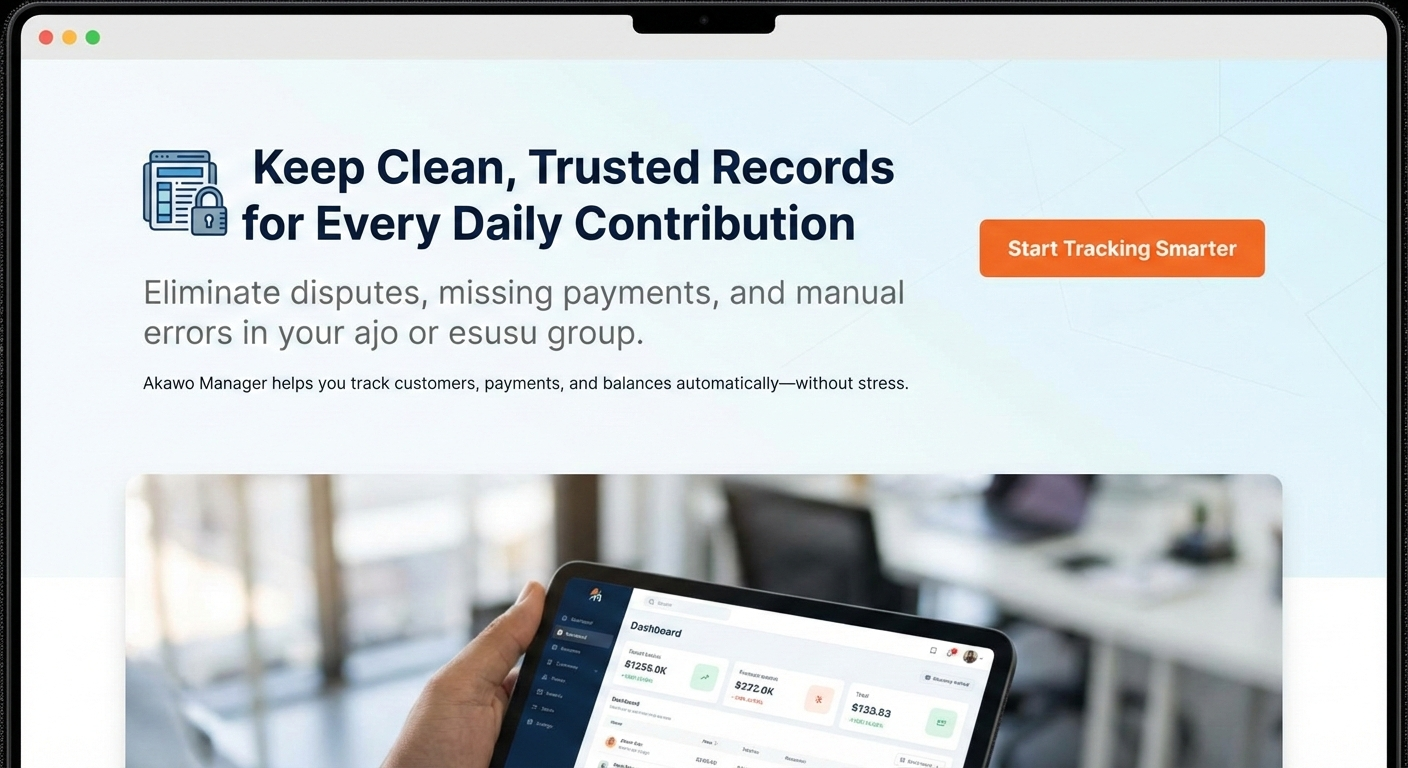
How to Keep Records for Daily Contribution Customers (Without Stress or Errors)
Managing daily contribution customers is not hard because people don’t pay — it’s hard because …