How to Know Your Profit in a Daily Contribution Business

Joseph Braide
5 minutes Read
Mar 9, 2026
5 views

Running a daily contribution business (Ajo or Esusu) can be profitable, but many contribution managers do not clearly track how much they actually earn.
You may be collecting money every day and handling many customers, but without proper records it becomes difficult to know your true profit.
Understanding your profit helps you know if your business is growing and if your efforts are paying off.
Let’s look at how to calculate and track profit in a daily contribution business.
1. Understand Where Your Profit Comes From
In most daily contribution businesses, profit usually comes from:
-
Commissions on daily contributions
-
Service charges
-
Loan interest
-
Late payment penalties
For example, if you collect ₦500 daily from 30 customers and charge a contribution fee or commission, that fee becomes part of your income.
Tracking these small earnings consistently is what determines your total profit.
2. Separate Customer Money From Your Earnings
One mistake many contribution managers make is mixing:
-
Customer contributions
-
Business profit
Remember, the money customers contribute belongs to them until withdrawal or payout.
Your profit is only the fees, commissions, or charges you collect for managing the contributions.
Keeping these records separate makes your financial picture much clearer.
3. Track All Transactions Properly
To know your profit, you need to keep records of:
-
Daily contributions collected
-
Withdrawals made by customers
-
Commissions earned
-
Loans issued
-
Loan repayments and interest
Without proper tracking, it becomes difficult to know exactly how much you have earned.
4. Calculate Your Total Commission
Your commission is usually your main source of income.
For example:
-
50 customers contributing ₦1,000 daily
-
If your commission is ₦200 per contribution cycle
Your total earnings depend on how many customers complete the cycle.
Tracking commissions helps you see how profitable your business is over time.
5. Monitor Loans and Interest
Some contribution managers also offer small loans to customers.
In this case, profit may come from:
-
Loan interest
-
Processing fees
Tracking these properly helps you understand how much extra income your business generates.
6. Use Digital Records for Accurate Profit Tracking
Manual notebooks can make it difficult to calculate profit correctly.
Digital tools allow you to:
-
Automatically track commissions
-
View total transactions
-
Monitor earnings over time
-
Avoid calculation errors
This gives you a clearer picture of how your contribution business is performing.
Conclusion
Knowing your profit is important if you want to grow your daily contribution business.
By keeping accurate records and tracking your commissions, loans, and transactions, you can clearly see how much your business is earning.
Digital tools make this process much easier and help you manage your contribution business more professionally.
Manage Your Contribution Business Better
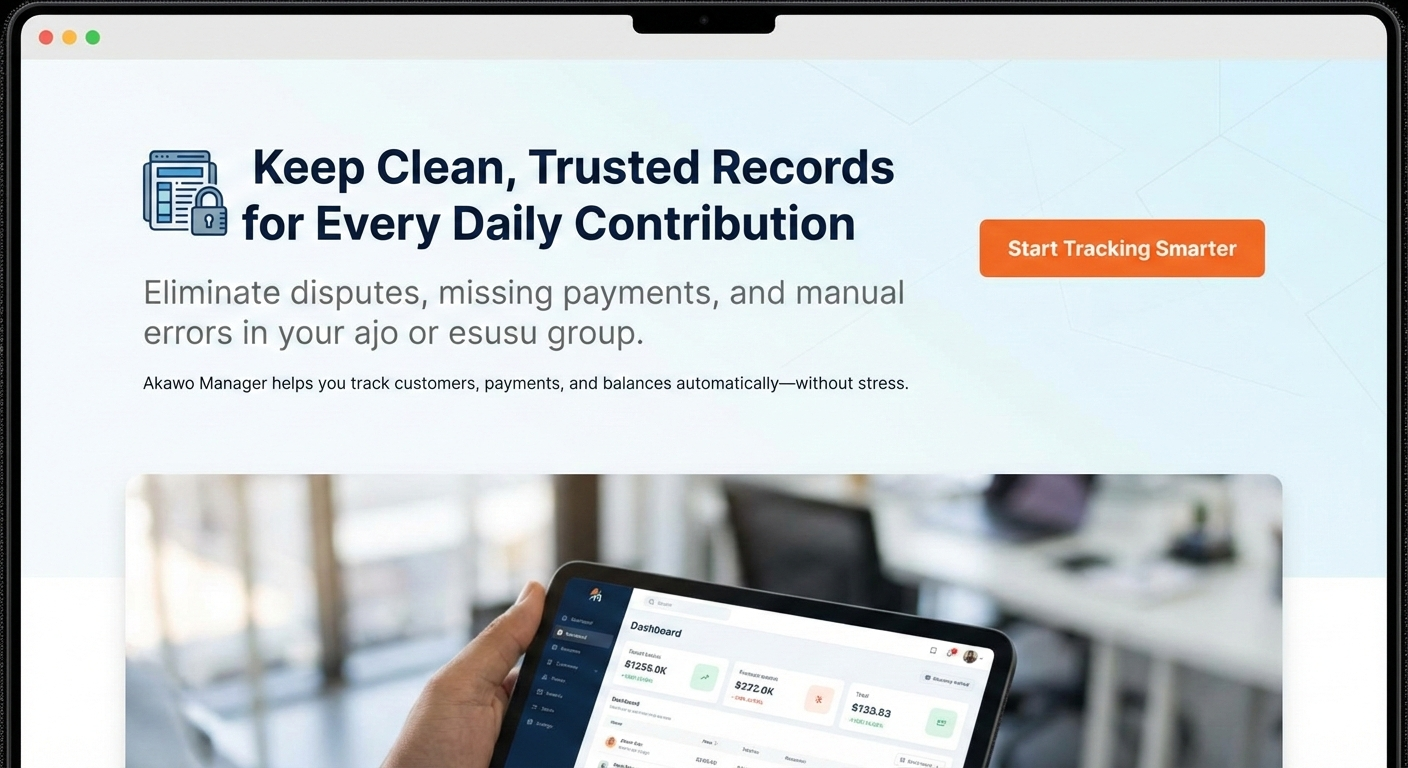
Akawo Manager helps contribution managers record transactions, track customer balances, and monitor commissions in one place.
With Akawo Manager, you can run your daily contribution business with better organization and confidence.

How a Contribution Management App Can Save You Time and Reduce Errors
The Hidden Cost of Manual Contribution Records If you run a daily contribution group—ajo, esusu, …

Akawo Manager vs Paper Records: Full Comparison
Still Using Paper Records for Daily Contributions? Here’s What It’s Really Costing You. For years, …
How to Keep Records for Daily Contribution Customers (Without Stress or Errors)
Managing daily contribution customers is not hard because people don’t pay — it’s hard because …