How to Turn Your Ajo Business into a Full-Time Income

Joseph Braide
5 minutes Read
Mar 15, 2026
1 views
Many daily contribution businesses (Ajo or Esusu) start as small side activities.
You might begin by helping a few friends, neighbors, or coworkers manage their daily savings. Over time, as more people join, the business grows.
With the right approach, a daily contribution business can grow large enough to become a reliable full-time source of income.
Here are some practical ways to turn your Ajo business into a sustainable full-time business.
1. Grow Your Customer Base
The more customers you manage, the higher your potential earnings.
Many contribution managers begin with 10 to 20 customers, but successful operators grow their network to hundreds of contributors.
You can grow your customer base by:
-
Building trust with existing customers
-
Encouraging referrals
-
Expanding into new communities or markets
Customer growth is the foundation of turning your Ajo business into a full-time income.
2. Offer Different Contribution Plans
Different customers have different financial capabilities.
Some customers may prefer smaller contributions, while others are comfortable with larger amounts.
Offering flexible plans such as:
-
₦500 daily
-
₦1,000 daily
-
₦5,000 daily
allows you to attract more participants and increase your overall transaction volume.
3. Earn Through Commissions and Service Charges
Most contribution managers earn money through commissions or service charges.
Your earnings may come from:
-
Contribution cycle fees
-
Service charges
-
Loan interest (if you provide loans)
Tracking these sources of income helps you understand how profitable your business is.
4. Expand with Agents
Handling hundreds of customers alone can be difficult.
Many successful contribution managers grow their businesses by working with agents who collect contributions in different areas or markets.
Agents can help you:
-
Reach more customers
-
Expand into new locations
-
Increase daily collections
With a strong agent network, your contribution business can grow much faster.
5. Maintain Strong Record Keeping
Accurate records are essential if your contribution business becomes your main source of income.
Without proper records, you may face problems such as:
-
Customer balance disputes
-
Missing transactions
-
Calculation errors
Reliable record keeping protects your reputation and keeps your business running smoothly.
6. Use Digital Tools to Manage Growth
As your customer base grows, managing records manually becomes more difficult.
Digital systems allow you to:
-
Record transactions quickly
-
Track balances automatically
-
Monitor your earnings
-
Manage customers and agents in one place
Using digital tools helps you run your contribution business more efficiently and professionally.
Conclusion
Turning your Ajo business into a full-time income is possible with the right strategy.
By growing your customer base, offering flexible contribution plans, expanding with agents, and maintaining accurate records, you can build a sustainable and profitable contribution business.
With proper organization and systems in place, your contribution business can become a reliable long-term source of income.
Run Your Contribution Business More Professionally
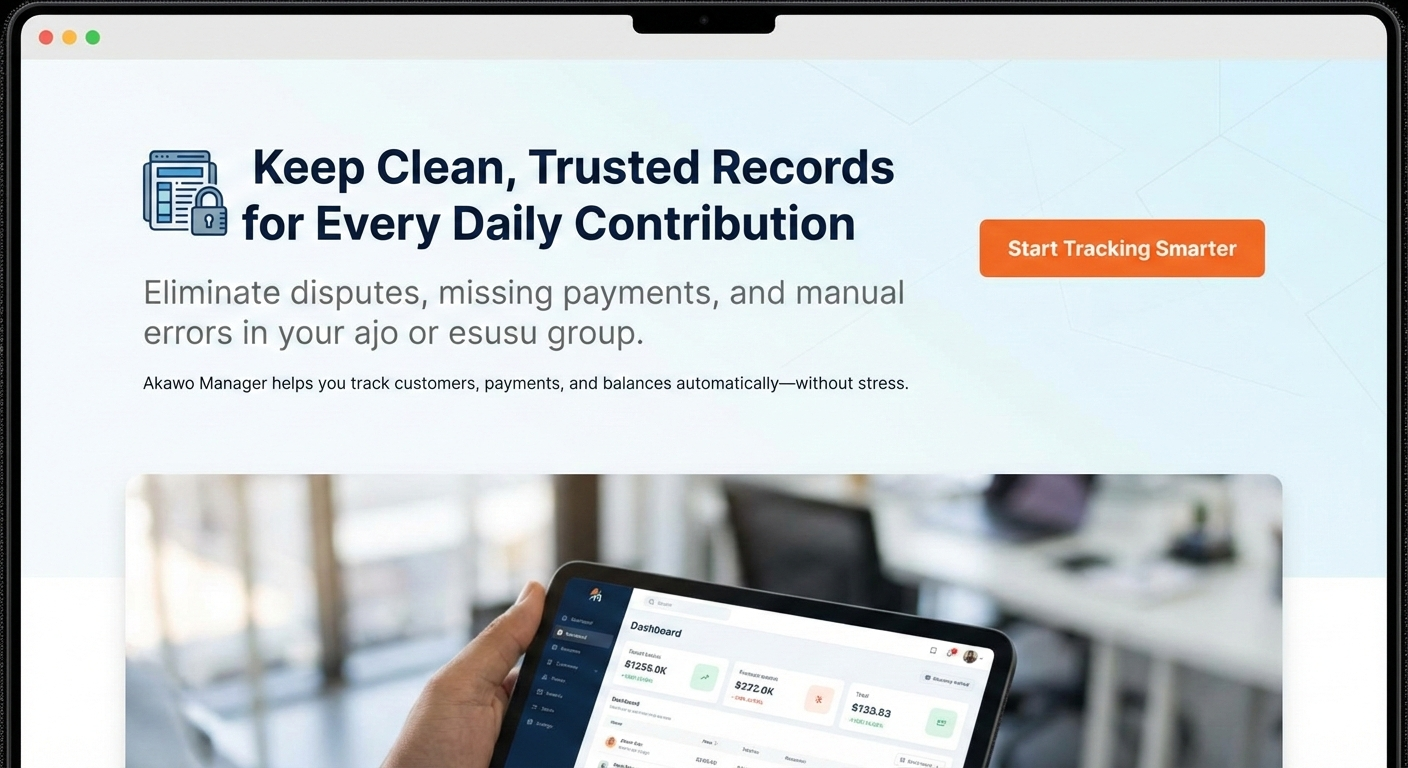
Akawo Manager helps contribution managers track transactions, monitor customer balances, and manage large contribution networks efficiently.
With Akawo Manager, you can organize your business and scale it with confidence.

How a Contribution Management App Can Save You Time and Reduce Errors
The Hidden Cost of Manual Contribution Records If you run a daily contribution group—ajo, esusu, …

Akawo Manager vs Paper Records: Full Comparison
Still Using Paper Records for Daily Contributions? Here’s What It’s Really Costing You. For years, …
How to Keep Records for Daily Contribution Customers (Without Stress or Errors)
Managing daily contribution customers is not hard because people don’t pay — it’s hard because …