When to Switch from Paper to Digital Records in Your Ajo Business

Joseph Braide
5 minutes Read
Mar 16, 2026
5 views
Many daily contribution managers (Ajo or Esusu) start their business using paper notebooks to record transactions.
This approach works when you have just a few customers. But as your contribution business grows, paper records can quickly become difficult to manage.
Knowing the right time to move from paper records to digital tools can help you avoid mistakes, reduce stress, and manage your business more professionally.
Here are some clear signs that it may be time to switch to digital records.
1. Your Customer List Is Growing Quickly
Managing records for 5–10 customers using a notebook is usually manageable.
However, once your business grows to 30, 50, or even 100 customers, paper records can become overwhelming.
You may find yourself:
-
Flipping through multiple pages to find a customer
-
Struggling to track balances accurately
-
Spending more time checking records
Digital systems allow you to search customer records instantly and manage large numbers of contributors more easily.
2. You Are Experiencing Record Mistakes
Paper records can sometimes lead to errors such as:
-
Writing the wrong amount
-
Missing a transaction
-
Miscalculating customer balances
These mistakes can lead to customer complaints and disputes.
Digital systems automatically calculate balances and keep transaction histories organized, reducing the chance of errors.
3. You Are Managing Multiple Agents
If your Ajo business involves agents collecting contributions in different locations, managing everything on paper becomes difficult.
It can be challenging to track:
-
Contributions collected by each agent
-
Customer balances across different areas
-
Transaction reports
Digital tools help you monitor activities more easily and keep all records in one place.
4. You Spend Too Much Time Checking Records
Many contribution managers spend a lot of time:
-
Reviewing notebooks
-
Recalculating balances
-
Verifying transactions
As your business grows, this process becomes slower and more stressful.
Digital records help you check customer balances, transaction history, and collections within seconds.
5. You Want to Grow Your Contribution Business
If your goal is to grow your Ajo business to hundreds of customers, digital tools become almost necessary.
They allow you to:
-
Record transactions faster
-
Track many customers efficiently
-
Maintain accurate records
-
Manage your business more professionally
Switching to digital records helps you build a system that can handle growth.
Conclusion
Paper records can work well in the early stages of a daily contribution business. However, as your customer base grows, managing records manually becomes more difficult and risky.
Switching to digital records helps reduce mistakes, save time, and improve organization.
If you want to scale your Ajo business and manage customers more efficiently, digital tools can make a big difference.
Manage Your Contribution Records Digitally
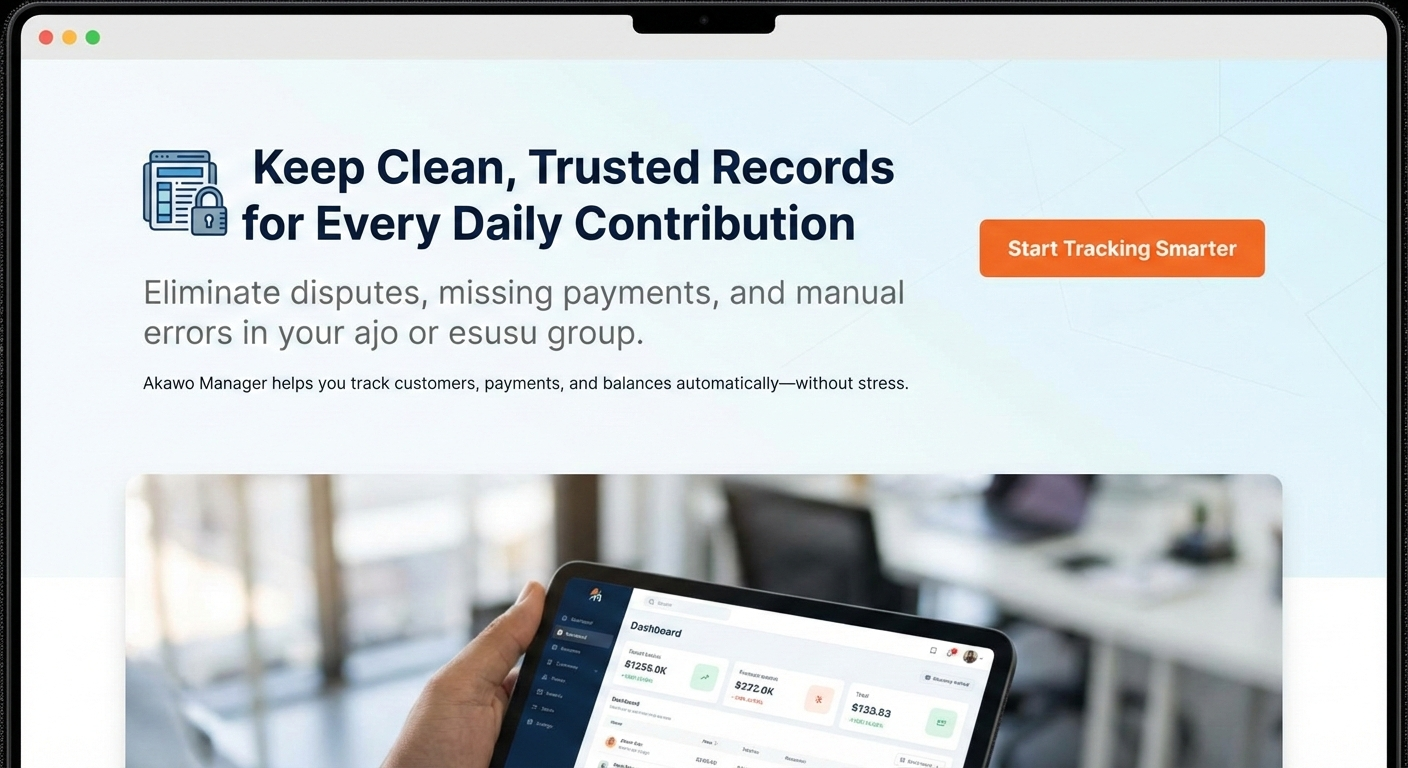
Akawo Manager helps daily contribution managers record transactions, track customer balances, and manage contributions more efficiently.
Instead of relying on paper notebooks, you can keep all your records organized digitally.
You can download the app here:
Akawo Manager App

How a Contribution Management App Can Save You Time and Reduce Errors
The Hidden Cost of Manual Contribution Records If you run a daily contribution group—ajo, esusu, …

Akawo Manager vs Paper Records: Full Comparison
Still Using Paper Records for Daily Contributions? Here’s What It’s Really Costing You. For years, …
How to Keep Records for Daily Contribution Customers (Without Stress or Errors)
Managing daily contribution customers is not hard because people don’t pay — it’s hard because …